A Dialogic Analysis of Damilare Kuku’s Nearly All Men in Lagos are Mad and Ugochuckwu Ugonna’s Who Drove Nearly all Men in Lagos Mad?

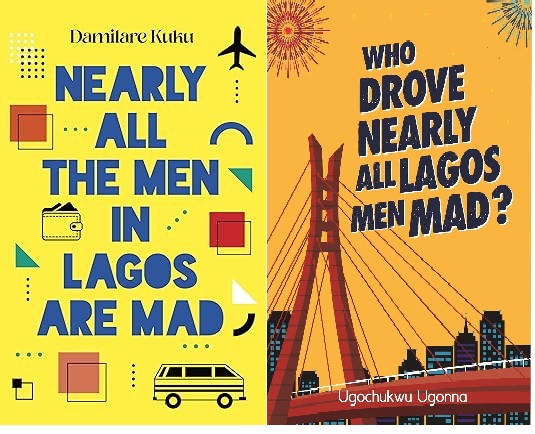
A Dialogic Analysis of Damilare Kuku’s Nearly All Men in Lagos are Mad and Ugochuckwu Ugonna’s Who Drove Nearly all Men in Lagos Mad?
Abstract
The study aimed to conduct a dialogic analysis of Damilare Kuku’s Nearly All Men in Lagos Are Mad and Ugochukwu Ugonna’s Who Drove Nearly All Men in Lagos Mad? The researcher formulated four objectives to guide the investigation. A qualitative research design was employed, focusing on a dialogic analysis of the two texts. This approach was deemed suitable because the study involved critical reading and interpretation of the primary texts. Mikhail Bakhtin’s theory of dialogism, which redefines our understanding of language, texts, and meaning, served as the theoretical framework. The findings revealed that Nearly All the Men in Lagos Are Mad by Damilare Kuku and Who Drove Nearly All Lagos Men Mad? by Ugochukwu Ugonna offer contrasting yet complementary views on gender roles, particularly masculinity. Kuku critiques men’s irresponsibility, emotional detachment, and selfishness, portraying women’s struggle in dealing with unreliable men in Lagos. On the other hand, Ugonna examines the societal pressures that lead men to such behaviors, portraying them as victims of unrealistic expectations regarding masculinity.
CHAPTER ONE
INTRODUCTION
1.1 Background to the Study
The post-structural literary tradition provides the framework for interrogating voices within a text or inter-texts. The notion that things exist in binary perspectives and that there is multimodality in the interpretation of a literary text was the preoccupation of the philosopher and literary critic Mikhail Bakhtin. Texts interact with one another on thematic preoccupation and subject matter. Sometimes, the voice in an author’s work echoes another in another text. According to Michael Holquist, “dialogic analysis is essential in literary studies. It offers an approach to understanding texts by acknowledging the complexity of voices and perspectives within a narrative” (105).
Holquist further adds that “unlike traditional monologic approaches, which often seek to extract a singular, authoritative meaning from a text, dialogic analysis recognizes that meaning is produced through the interaction of diverse voices, each contributing to the overall discourse. One of the most significant contributions of dialogic analysis is its ability to deconstruct the notion of a singular, authoritative voice within a text. This is particularly important in the analysis of novels and other literary forms where multiple characters, narrators, and even the author engage in a complex interplay of voices. For instance, in a novel, the protagonist’s voice may be in dialogue with other characters, the narrator, and the implied author, creating a rich tapestry of perspectives that reflect the complexities of human experience” (105).
Furthermore, Sue Vice opines that “dialogic analysis allows for the exploration of how texts engage with their social, historical, and cultural contexts. Literature does not exist in a vacuum; it is produced within a specific context that influences its themes, characterisation, and narrative structure. By examining the dialogic relationships within a text, scholars can uncover how a work of literature responds to and interacts with the ideological currents of its time. This approach is particularly valuable in postcolonial literature, where texts often engage in a dialogue with the colonial past, challenging and subverting dominant narratives” (96). Holquist also notes that “dialogic analysis, as a concept is rooted in the theories of Russian philosopher and literary critic Bakhtin, has had a profound influence on the way we understand and interpret literature. The origins of dialogic analysis can be traced back to Bakhtin’s work in the early 20th century, particularly his exploration of the dialogic nature of language in literature. Bakhtin’s ideas were revolutionary, as they challenged the prevailing monologic or singular interpretation of texts, which had dominated literary criticism up to that point” (106)
In the same vein, Maranhao Tullio and Bernhard Streck aver that Bakhtin’s early work, Problems of Dostoevsky’s Poetics (1929), introduced the idea of the polyphonic novel, where multiple voices, each with its own perspective, coexist and interact within a narrative. He used the works of Fyodor Dostoevsky as a primary example, illustrating how Dostoevsky’s characters are not mere mouthpieces for the author’s ideology but rather independent voices that engage in dialogue with one another, thereby creating a complex and dynamic narrative structure. This idea was further developed in his later work, The Dialogic Imagination (1981), where Bakhtin introduced key concepts such as heteroglossia, which refers to the coexistence of distinct varieties within a single language, and chronotope, the way time and space are represented in narrative.
A Dialogic Analysis of Damilare Kuku’s Nearly All Men in Lagos are Mad and Ugochuckwu Ugonna’s Who Drove Nearly all Men in Lagos Mad?
Maranhao, and Bernhard further added that “Bakhtin’s notion of dialogism emphasizes that all language is inherently dialogic, meaning that it is always in response to previous utterances and anticipates future responses” (79). This perspective transformed the understanding of texts from static, isolated entities to dynamic, interactive discourses. Dialogic analysis, therefore, is concerned with the interplay of these voices within a text, as well as the dialogue between the text and its broader socio-cultural context. The authors also added that “in the mid-20th century, Bakhtin’s ideas were further expanded by scholars like Julia Kristeva, who coined the term “intertextuality” to describe the interrelationship between texts. Kristeva argued that every text is a mosaic of references to other texts, and these references create a dialogue that shapes the meaning of the text. This concept has been instrumental in poststructuralist and deconstructionist theories, influencing how texts are analyzed in relation to one another” (80).
Moreover, Ashton Nichols opines that “dialogic analysis is particularly relevant in the study of marginalized voices in literature” (22). By examining how these voices interact with dominant discourses within a text, scholars can uncover the power dynamics and ideological conflicts that shape the narrative. This approach has been widely used in feminist literary criticism, where the focus is often on how female voices are silenced, marginalized, or subverted within a patriarchal literary tradition. Similarly, in postcolonial studies, dialogic analysis allows for the examination of how colonized voices interact with and resist colonial narratives.
The creative practice of authors being influenced by another author; texts being influenced by other texts; or responding to; or even echoing the “voices” of other texts by way of dialogue or rebutal dates back to antiquity. This is the background to the concept and theory of Intertextuality, which was defined by T.S. Eliot (1888-1965) as:” the relation between a work and tradition and culture, which is a vast network of texts,and in which all other texts reside sychronically, paved the way for the quasi- intertextual assumption that every author has and should have a historical consciousness and no text exists of its own in the Tradition”(Mevlude Zengin: 300) This is the basis by which one text could constitute a resource for dialogue with another text. In other words, text is seen as always responding to other texts.
It is against this critical historical backdrop that the issues captured in Damilare Kuku’s Nearly All the Men in Lagos Are Mad and Ugochukwu Ugonna’s Who Drove All Lagos Men Mad could be subjected to a dialogic examination because the two texts tend to be talking and also responding to each other respectively. There is nothing short of intertextualism when the two narrative scenarios are closely considered. It is in this regard that Zengin (above) defines Intertextuality as the following:
As a phenomenon. It has sometime been defined as a set of relations which a text has with other texts and/ or discourses belonging to various fields and cultural domains. Yet the commencement of Intertextuality as a critical theory and as approach to texts was provided by the formulations of such theorists as Ferdinand de Saussure, Mikhail Bakhtin and Roland Barthes before the term ‘Intertextuality’ was coined by Juhia Kristava in 1966 (299).
As a critical theory, dialogism thus springs from the Tenets of Mikhail Bakhtin’s Intertextuality, which is seen simply as the naunced principles of text talking to or dialoguing other texts, or of author being inspired from the extant Literary, cultural or social texts. In African Literature, there have been several cases of authors who have been inspired to write texts that seem to respond to already existing texts. The examples include Achebe’s Things Fall Apart, Ola Rotimi’s The Gods Are Not to Blame, Umunakwe’s Dear Ramatulaye, among others.
According to Amina Peter, Damilare Kuku is a Nigerian author renowned for her storytelling that captures the complexities of contemporary African life. She is known for her debut short story collection Nearly All the Men in Lagos Are Mad, which humorously yet incisively delves into the realities of dating and relationships in Lagos, Nigeria. Kuku’s work reflects the nuances of modern African society, blending humor, satire, and realism to explore the intersection of gender, culture, and identity. Her stories often highlight the challenges faced by women, presenting a bold and unflinching perspective on issues such as love, betrayal, and societal expectations.
In the same vein, Emeka Chika also added that Ugochukwu Ugonna, on the other hand, is an emerging Nigerian author and playwright whose works focus on the socio-political and cultural dynamics within Nigerian society. His writing, which includes plays and short stories, often explores themes of power, corruption, and social justice. Ugonna’s narratives are characterized by the deep engagement with the struggles of everyday Nigerians, aiming to illuminate the complexities of the human condition in the face of systemic challenges. “His literary style is marked by its evocative language and critical examination of both personal and societal conflicts” (20).
It is within this critical historical framework that are present in Damilare Kuku’s Nearly All the Men in Lagos Are Mad and Ugochukwu Ugonna’s Who Drove All Lagos Men Mad that this research seeks to carry out a dialogic analysis as both texts appear to engage in an intertextual dialogue, with each text responding to and addressing the arguments and themes raised by the other.
A Dialogic Analysis of Damilare Kuku’s Nearly All Men in Lagos are Mad and Ugochuckwu Ugonna’s Who Drove Nearly all Men in Lagos Mad?
1.2 Statement of the Problem
Previous research on Nigerian literature has often focused on the portrayal of gender roles and societal expectations. For example, scholars such as Olufunke Adeboye have explored the representation of women in Nigerian urban fiction, emphasizing the challenges they face within patriarchal societies. Similarly, Chikwenye Okonjo Ogunyemi has discussed how Nigerian women writers have used their work to critique and resist patriarchal oppression. Ato Quayson has discusses the idea of “intertextual entanglements in African literature, where different narratives and traditions intersect and influence each other” (48). While Quayson’s work provides valuable insights into the interconnectedness of African literary texts, it does not specifically address the dialogic interplay between Kuku’s and Ugonna’s works These studies have significantly contributed to our understanding of gender dynamics in Nigerian literature, highlighting the complexities of women’s experiences and the societal pressures they navigate.
However, much of this research has focused on either male or female perspectives in isolation, without examining how male and female narratives might interact dialogically within the same cultural space. For instance, while Ogunyemi’s work emphasizes the feminist critique in Nigerian women’s literature, it does not engage with how these feminist perspectives might be in dialogue with contemporary male-authored texts that address similar themes from a different angle. This study aims to fill that gap by exploring the dialogic relationship between Kuku’s and Ugonna’s works, considering how each text responds to and reframes the other’s portrayal of gender relations in Lagos. Also, the current study seeks to build on Quayson’s concept of intertextuality by applying it to a focused analysis of these two contemporary Nigerian texts, exploring how they engage in a direct and explicit dialogue with each other. Additionally, there remains a gap in the dialogic analysis of how contemporary male and female narratives engage with each other. This study aims to fill that gap by focusing on the interaction between Kuku’s Nearly All The Men in Lagos Are Mad and Ugonna’s Who Drove Nearly All Lagos Men Mad?, thereby offering new insights into the dialogic nature of Nigerian literature and the complexities of gender relations in Lagos.
1.3 Aims and Objectives
The primary aim of this study is to conduct a comprehensive dialogic analysis of Damilare Kuku’s Nearly All The Men in Lagos Are Mad and Ugochukwu Ugonna’s Who Drove Nearly All Lagos Men Mad?. Specifically, the objectives of the study is to;
- Investigate how Nearly All The Men in Lagos Are Mad and Who Drove Nearly All Lagos Men Mad? respond to each other through their narratives, themes, and character portrayals.
- Identify and evaluate the ways in which the two texts engage in a literary dialogue that reflects the complexities of gender relations in Lagos.
- Examine how each text portrays male and female characters, focusing on the social, cultural, and psychological factors that influence their behavior and interactions.
- Situate the two texts within the broader landscape of contemporary Nigerian literature, exploring how they engage with and challenge existing literary conventions related to gender and identity.
1.4 Research Methodology
This study will employ a qualitative research design, focusing on a dialogic analysis of Damilare Kuku’s Nearly All The Men in Lagos Are Mad and Ugochukwu Ugonna’s Who Drove Nearly All Lagos Men Mad? The qualitative approach is appropriate because this work is carried out through critical reading and analysis of the primary texts. Dialogic analysis which is grounded in Mikhail Bakhtin’s theories, will be the primary method used to examine the interplay of voices and perspectives within and between the texts. While relevant library materials like text books, journals, magazines and internet sources constitute the secondary sources of data for this study.
1.5 Scope and Delimitation
The scope of this study centers on a detailed dialogic analysis of two contemporary Nigerian literary works: Damilare Kuku’s Nearly All The Men in Lagos Are Mad and Ugochukwu Ugonna’s Who Drove Nearly All Lagos Men Mad? The research will explore how these texts engage with each other, reflecting and critiquing the complexities of gender relations within the unique socio-cultural context of Lagos, Nigeria. Specifically, the study will analyze the narratives, themes, and characterizations in each work to understand how they engage in a literary dialogue that offers multiple perspectives on the experiences of men and women in Lagos. It will also investigate how these texts represent interactions between men and women, focusing on the social, cultural, and psychological factors influencing these dynamics.
However, to maintain focus and clarity, the study will be delimited in certain respects. First, the analysis will be confined to the two selected texts: Nearly All The Men in Lagos Are Mad by Damilare Kuku and Who Drove Nearly All Lagos Men Mad? by Ugochukwu Ugonna. No other texts will be analyzed in depth, though references to other works may be made where relevant.
1.7 Bio-data of Authors
7.1.1 Damilare Kuku
Damilare Kuku, born on February 14, 1987, in Lagos, Nigeria, grew up surrounded by the vibrant culture and urban complexities of the city, which greatly influenced her writing. She pursued a Bachelor of Arts degree in Theatre Arts at Obafemi Awolowo University, where she gained skills in storytelling, character development, and dialogue. Her experiences in various theatrical productions deepened her understanding of human behavior, a theme she weaves into her literary works. After her education, Kuku built a multifaceted career in the Nigerian entertainment industry as an actress, filmmaker, and writer. Her debut literary work, Nearly All The Men in Lagos Are Mad (2021), a collection of short stories, garnered attention for its satirical exploration of gender relations in Lagos. Through these stories, Kuku critiques societal expectations and the challenges women face in navigating modern relationships. Her versatility as a storyteller is further showcased in her screenplays and stage plays, often addressing themes like love, betrayal, and the struggles of women in a patriarchal society.
In addition to her writing, Kuku’s acting career has flourished, with appearances in several Nigerian films and television series. Her understanding of performance enhances her ability to create vivid characters in her literary works. An advocate for women’s rights and gender equality, Kuku frequently participates in discussions and panels, using her platform to raise awareness about the issues facing women in Nigeria and beyond.
A Dialogic Analysis of Damilare Kuku’s Nearly All Men in Lagos are Mad and Ugochuckwu Ugonna’s Who Drove Nearly all Men in Lagos Mad?
1.7.2 Ugochukwu Ugonna
Ugochukwu Ugonna, born on June 5, 1983, in Enugu, Nigeria, was raised in a culturally rich environment that fueled his passion for literature and social issues. His education at the University of Nigeria, Nsukka (UNN), where he earned a degree in English Language and Literature, deepened his understanding of literary theory and criticism. Active in the literary community, Ugonna participated in writing workshops and academic conferences, shaping his intellectual development and commitment to exploring social and cultural issues through his writing. Ugonna is best known for his novel Who Drove Nearly All Lagos Men Mad? (2022), a counter-narrative to Damilare Kuku’s Nearly All The Men in Lagos Are Mad. In this work, he provides an alternative perspective on gender relations in Lagos, focusing on societal expectations placed on men. His writing challenges stereotypes and offers a more balanced view of gender dynamics in contemporary Nigerian society. Alongside his book, Ugonna has published numerous essays, articles, and short stories, addressing themes like gender inequality, urbanization, and the tension between tradition and modernity.
In addition to his literary achievements, Ugonna is an academic and social commentator, contributing to discussions on literature, gender studies, and African socio-political issues. His writings are respected for their analytical depth and commitment to social change. Ugonna is also active in promoting literacy and education in Nigeria, regularly speaking at literary festivals and public forums, advocating for the role of literature in fostering critical social discourse.
A Dialogic Analysis of Damilare Kuku’s Nearly All Men in Lagos are Mad and Ugochuckwu Ugonna’s Who Drove Nearly all Men in Lagos Mad?
1.8 Theoretical Framework: Mikhail Bakhtin’s Theory of Dialogism
Mikhail Bakhtin’s theory of dialogism is a foundational concept in literary theory that radically redefines our understanding of language, texts, and meaning. Bakhtin, a Russian philosopher and literary critic, developed this theory as part of his broader exploration of the nature of language and its social functions. Central to Bakhtin’s thought is the idea that all language—and, by extension, all literature—is inherently dialogic, meaning it is shaped by and responsive to other voices, texts, and social contexts.
At the core of dialogism is the belief that language is not a neutral, monologic tool used by an individual to express a singular, isolated thought. Instead, language is always in dialogue with other languages, ideas, and contexts. This means that every utterance or piece of text is a response to what has been said before and anticipates future responses. Bakhtin famously argued that “the word in language is half someone else’s, emphasizing that our words are always influenced by the words of others” (293). This view challenges the traditional notion of language as a direct expression of individual thought, suggesting instead that meaning is never fixed or final but constantly evolving through interaction with other voices.
One of Bakhtin’s most influential contributions to literary theory is the concept of polyphony, particularly evident in his analysis of the novels of Fyodor Dostoevsky. Polyphony refers to a literary work that contains multiple, distinct voices or perspectives, none of which dominates or subordinates the others. In a polyphonic text, these voices interact and coexist, creating a rich tapestry of meanings. Bakhtin admired Dostoevsky for his ability to create a “plurality of independent and unmerged voices and consciousnesses” within his novels. For Bakhtin, this multiplicity of voices is essential for a deeper understanding of the human condition, as it allows for a more nuanced exploration of different viewpoints. In a polyphonic novel, characters are not merely mouthpieces for the author’s ideology; instead, they possess their own voices and perspectives, which contribute to the overall dialogic structure of the text.
Closely related to polyphony is the concept of heteroglossia, which refers to the diversity of voices, styles, and languages within a single text. Heteroglossia acknowledges that a text can contain multiple languages or dialects, each with its own social and cultural connotations. This multiplicity reflects the complexity of social life, where different voices and perspectives coexist and interact. Bakhtin argued that this diversity is what gives a text its richness and depth, as it mirrors the complexity of real-world communication. Heteroglossia thus enables a text to engage with a variety of social discourses, allowing it to resonate with different audiences and to address multiple aspects of the human experience.
Bakhtin also introduced the concept of the carnivalesque, which refers to a literary mode that subverts and liberates the assumptions of the dominant culture through humor, chaos, and the inversion of social norms. The carnivalesque creates a space where different voices and perspectives can be heard, often in a way that challenges established hierarchies and conventions. In literature, this can manifest as a celebration of the grotesque, the absurd, and the contradictory aspects of human life. Bakhtin saw the carnivalesque as “a crucial element of popular culture, one that allows for a temporary suspension of social hierarchies and enables the expression of voices that are typically marginalized or suppressed” (122). In literary works, the carnivalesque can be used to question and destabilize dominant ideologies, opening up new possibilities for meaning and interpretation.
Another important concept in Bakhtin’s theory is the chronotope, which refers to the way in which time and space are represented in literature. The chronotope allows for the exploration of how different times and places interact within a narrative, contributing to the overall dialogic structure of the text. Through the chronotope, Bakhtin demonstrates how literature can encapsulate the complexity of human experience across different temporal and spatial contexts. The chronotope is not just a backdrop for the action of a narrative; it is integral to the way that meaning is constructed within the text. By examining the interplay of time and space, Bakhtin shows how literary works can reflect the dynamics of history and culture, capturing the ways in which different historical periods and social spaces interact and influence one another.
In literature, dialogism challenges the notion of a single, authoritative narrative voice. Instead, it suggests that every literary work is part of an ongoing dialogue with other texts and with the cultural and social contexts in which it is produced. This means that a text is always open to multiple interpretations, depending on how it is read in relation to other texts and voices. For example, a novel may be in dialogue with historical events, other literary works, or even with the reader’s own experiences and expectations. In this way, dialogism allows us to see literature not as a static artifact but as a living, dynamic process that evolves over time and in response to different cultural and social influences.
Bakhtin’s concept of dialogism is particularly useful in analyzing texts that engage with multiple perspectives or that are part of a larger literary conversation. For instance, in the context of Damilare Kuku’s Nearly All The Men in Lagos Are Mad and Ugochukwu Ugonna’s Who Drove Nearly All Lagos Men Mad?, dialogism allows us to see how these texts interact with each other, each responding to and reframing the other’s portrayal of gender relations in Lagos. This interaction enriches the reader’s understanding of the themes and characters, as it reveals the complexity and multiplicity of voices that contribute to the narrative.
Bakhtin’s theory of dialogism has had a profound impact on literary studies, particularly in the analysis of novels, where multiple characters, voices, and perspectives are often in play. It has also influenced other fields such as cultural studies, linguistics, and philosophy, where the interplay of different voices and perspectives is central to understanding social and cultural phenomena. In essence, dialogism offers a way to appreciate the richness and complexity of literature as a reflection of human communication and interaction. It challenges the reader to move beyond a simplistic, monologic interpretation of a text and to engage with the multiple voices and meanings that contribute to its overall message. Through dialogism, Bakhtin provides a framework for understanding how literature both shapes and is shaped by the dynamic and ongoing dialogue of human culture.