African Spirituality in Modern Storytelling: A Study of Marlon James’ Black Leopard Red Wolf

African Spirituality in Modern Storytelling: A Study of Marlon James’ Black Leopard Red Wolf
CHAPTER ONE
INTRODUCTION
1.1 Background to the Study
African literature has historically served as a repository for cultural values, spiritual beliefs, and indigenous epistemologies. Deeply influenced by oral performance, African literature integrates African cosmology, spirituality and metaphysical elements into narratives. Such oral elements in African oral and modern literature reinforce social values, norms, communal bonds, and preserve ancestral wisdom. Modern African narratives often include gods, spirits, ancestors and cosmic forces, reflecting a worldview in which the spiritual and physical realms coexist and interact. In contemporary times, African spirituality has remained a vital component of modern African literature as writer continuously draw from the rich oral tradition of the African people, especially in weaving narratives in the growing genre of speculative fiction and fantasy.
According to Wande Abimbola, “African spirituality is deeply rooted in precolonial belief systems, cosmologies and rituals. It functions not merely as thematic decoration but as a foundational ontological and narrative structure. Within these belief systems, the spiritual and material worlds are inextricably linked; ancestors, divinities, spirits, and human beings coexist in a relational continuum” (22). “This spiritual worldview challenges Western or Cartesian dualism and the Western literary canon’s tendency to compartmentalise the metaphysical from the real” (23). Thus, African literature often employs spiritual tropes and metaphors not only to authenticate cultural identity but to question dominant discourses of modernity, rationality and history. It deconstructs the binary structure evidently inherent in the Western worldview and thought processes.
Moreover, Philip Aghoghovwia, posits that “African speculative fiction, encompassing science fiction, fantasy, horror and magical realism, is increasingly used as a creative space for reimagining African histories, futures and spiritualities” (83). Therefore, it is not surprising that contemporary writers draw upon ancestral myths, oral traditions and cosmological systems to create works that not only entertain but also critique colonial legacies and assert African cultural sovereignty. African fantasy, in particular, is becoming a platform for authors to subvert Eurocentric fantasy tropes and affirm the validity of African knowledge systems and metaphysical traditions. This is achieved not by mere conjectures but by a conscious and consistent adaptation of African oral performances, which African cosmology and spirituality are heavily present.
Modern African literature, particularly post-independence African literature, has evolved into a fertile site for the revitalisation of African cosmic laws and spirituality. Prominent first-generation African authors such as Chinua Achebe, Wole Soyinka, Ben Okri, Ngũgĩ wa Thiong’o, and some contemporary literary voices like Nnedi Okorafor and Jennifer Nansubuga Makumbi have integrated indigenous religious thoughts, beliefs, spiritual logic and symbolic practices into their narrative frameworks. Their narratives foreground cosmological orders imbued in African metaphysics: ancestral reverence, the cyclical nature of time, spiritual justice, reincarnation, and divination (Abiola Irele, 145). Such storytelling approaches are not nostalgic returns to mythic pasts but active interventions in ongoing cultural and political dialogues. In this way, African spirituality becomes a tool of decolonisation, offering an alternative ontology that resists Eurocentric literary paradigms.
African Spirituality in Modern Storytelling: A Study of Marlon James’ Black Leopard Red Wolf
Additionally, John Mbiti observes that “the integration of African spirituality serves both representational and structural purposes. On the one hand, spiritual beliefs inform character motivations, plot developments and thematic concerns such as justice, fate, and morality. On the other hand, they influence the very architecture of the narrative, resulting in non-linear timelines, multiple narrative voices (including spiritual or ancestral ones) and porous boundaries between life and death”(102). For instance, in Ben Okri’s The Famished Road, there is a conscious and creative juxtaposition of the physical setting and narrative voice with the spiritual world and voices, thereby creating a seamless coexistence between the world of the and the world of the dead. The protagonist Azaro, an abiku or spirit child exists, in a liminal state between the world of the living and the spirit world, embodying the permeability of spiritual and physical realms. Likewise, Wole Soyinka’s drama reflects Yoruba cosmology through its tripartite division of existence world of the living, world of the ancestors and the world of the unborn, emphasising that human experience is a sacred continuum.
Furthermore, Irele opines that “the resurgence of African spirituality in literature is often a political act. In many cases, African writers consciously invoke indigenous spiritual systems to counter the erasure and demonisation of these belief structures under colonial rule and Christian missionary efforts” (89). By weaving spiritual narratives into modern storytelling, authors assert the legitimacy of African knowledge systems, affirming their intellectual sophistication and relevance to contemporary social discourse. As Ngũgĩ wa Thiong’o argues, “the reclamation of African orature and belief systems is essential to the decolonisation of the African mind and imagination” (101). Consequently, storytelling becomes a site of resistance, reparation, and renewal.
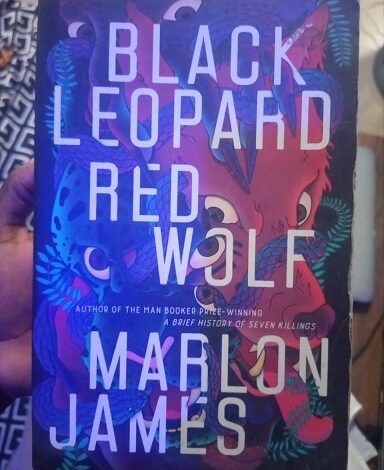
Among the important landmark contributions to the trope of spirituality in African literature is Marlon James’s Black Leopard, Red Wolf (2019). The text builds a fictional world that is rich in spiritual motifs, mythological frameworks, and indigenous cosmologies. The work does not merely incorporate African spirituality as a thematic backdrop; rather, it foregrounds spirituality as a central mechanism through which characters interact with the world and navigate systems of power, identity and resistance. In Black Leopard, Red Wolf by Marlon James draws heavily from various African mythologies and spiritual beliefs to craft a narrative filled with shapeshifters, witches, oracles and divine intervention.
James’ protagonist, Tracker, moves through a world where spiritual realities are just as tangible as physical ones, and where the boundaries between life, death, and transformation are fluid. The story uses the structure of the African griot tradition and reflects the multiplicity of truth in oral storytelling, a practice heavily influenced by spiritual dimensions. The text signifies a broader movement in African literature that seeks to deconstruct Western narrative conventions and affirming African-centered ontologies. As Suyi Okungbowa notes, “African fantasy should not be an imitation of Western high fantasy but an exploration of indigenous philosophies, power systems, and spiritualities that have long been ignored or misrepresented in global literature” (68). Similarly, James argues for the importance of centering African mythologies and non-linear storytelling as legitimate modes of literary expression (James, “Rewriting Fantasy”).
Resurgence of interest in African spirituality in literature is also a response to centuries of colonial and missionary campaigns that sought to delegitimise indigenous belief systems. The use of spiritual elements in the African novels is not merely nostalgic; it functions as a tool of cultural resistance and reclamation. African spirituality, when reimagined in fiction, offers a counter-narrative to the Western worldview that privileges rationalism, materialism and linear time (Ndlovu, 58). Instead, it opens up a pluralistic view of reality; where ancestors influence the present, where the spiritual is woven into the political, and where identity is shaped by more than individual autonomy. Simon Gikandi asserts that “African spirituality in literature presents an epistemic alternative. It challenges readers to engage with ways of knowing that are holistic, relational, and deeply symbolic” (55). In Black Leopard, Red Wolf, spiritual beliefs are not allegories but lived experiences that shape moral choices, community dynamics, and historical memory. This affirms that African spirituality is not static or obsolete but dynamic and relevant, capable of shaping futuristic and fantastical narratives grounded in African realities. It is against this backdrop that this study seeks to examine African spirituality in Marlon James’s Black Leopard, Red Wolf.
African Spirituality in Modern Storytelling: A Study of Marlon James’ Black Leopard Red Wolf
1.2 Statement of the Problem
Mudimbe Valentin notes that historically, colonial and missionary discourses portray African spiritual systems as primitive, irrational, or demonic. This persists in the mainstream fiction, wherein African-inspired settings often serve as exoticized backdrops stripped of their epistemological and spiritual depth. While African fiction has recently gained critical attention, much of the scholarships tend to prioritise its political, technological or dystopian dimensions rather than its spiritual frameworks. For example, Philip Aghoghovwia’s study on Afrofuturism and Africanfuturism addresses themes of displacement and futurity in African speculative fiction but does not examine the specific role of indigenous spiritual systems as structuring principles in narrative. Similarly, Daria Tunca’s work on selected postcolonial African novel focuses on speculative elements as allegories of postcolonial critique without sustained attention to African spirituality as a coherent, legitimate worldview integrated into literature.
However, these studies do not give specific attention to how African spirituality is represented, reimagined and conceptualised in contemporary literature. The cited studies treat spirituality as part of cultural background or symbolic heritage rather than as an epistemological system with its own logic, cosmology, and narrative authority. This gap is especially evident in the scholarly attention given Marlon James’ Black Leopard, Red Wolf (2019). Therefore, this work fills this gap in scholarship by critically examining the representation of African spirituality as a tool for deconstructing colonial epistemology and affirm African worldviews in Black Leopard, Red Wolf which will be achieve through critical reading and analysis of the text understudy using the lens of postcolonial theory.
African Spirituality in Modern Storytelling: A Study of Marlon James’ Black Leopard Red Wolf
1.3 Aim and Objectives of the Study
The primary aim of this study is to examine how African spirituality is reimagined and represented in Marlon James’ in Black Leopard, Red Wolf. The specific objectives this study are to:
- explore the elements of African spirituality in Black Leopard, Red Wolf;
- investigate how African spirituality serves as a framework of resistance, cultural reclamation and epistemic decolonisation in Black Leopard, Red Wolf;
- analyse the narrative strategies used in the selected text by the author.
1.4. Significance of the Study
This study addresses an important gap in African literary scholarship by foregrounding the role of African spirituality in contemporary fantasy storytelling. At a time when global fantasy literature remains heavily dominated by Western mythologies and epitemologies, this research offers a necessary reconstructive interrogation of how African authors draw on indigenous spiritual systems to build complex, meaningful and culturally rooted narrative worlds. By doing so, the study contributes to the broader project of decolonising African literature, challenging the dominance of Eurocentric narrative structures, and validating African epistemologies as rich, sophisticated foundations for understanding reality in Africa.
For scholars and students of African literature, this research provides a nuanced reading of African spirituality in contemporary fantasy fiction. The study enhances the understanding of African speculative fiction as a serious and evolving African fiction, while serving as a reference material for subsequent researchers in the same or related areas of research. Above all, it is significant in its contribution to research in postcolonial studies and African magical realism.
1.5 Scope and Delimitation
This study examines how African spirituality is represented and reimagined in modern African literature, especially in Black Leopard, Red Wolf by Marlon James. It explores how both authors draw from indigenous African cosmologies and spiritual traditions to construct fictional worlds that engage themes of identity, belief, and power. Though the novel is part of trilogies, the research is limited to its first volumes to analyze foundational spiritual and narrative elements. The analysis centers on concepts such as ancestor veneration, divine influence, rituals, and metaphysical dualism as essential to character development and world-building. This offers a focused and rigorous exploration of African spirituality in contemporary fantasy fiction by African and diasporic writers.
1.6 Research Methodology
This study adopts a qualitative research design, specifically using textual analysis within the framework of literary and cultural studies. Textual analysis allows for a close reading of selected texts to uncover underlying themes, motifs, symbols, and ideological structures. The study employs comparative literary analysis to explore the representation of African spirituality in two modern fantasy novels from African and Caribbean authors. By analyzing how African cosmologies, rituals, and spiritual systems are woven into narrative structures, the research seeks to provide a nuanced understanding of the evolving role of African spirituality in speculative fiction. While relevant library materials like text books, journals, magazines and internet sources constitute the secondary sources of data for this study.
1.7. Bio-data of the Author
Marlon James is a Jamaican novelist and professor of literature whose work often explores themes of identity, spirituality, violence and mythology. Born on November 24, 1970, in Kingston, Jamaica, James studied literature at the University of West Indies, and later earned a master’s degree in creative writing from Wilkes University in Pennsylvania, USA. He currently teaches creative writing at Macalester College in Minnesota (Wikipedia). James gained international recognition with his novel, A Brief History of Seven Killings (2014), which won the prestigious Man Booker Prize in 2015. However, it was with the publication of Black Leopard, Red Wolf in 2019, the first book in The Dark Star Trilogy, that he ventured into the realm of African-inspired fantasy. With this work, James aimed to “decolonise” the fantasy genre by turning to African mythologies, oral traditions and spiritual systems as foundational elements of his creative world. The novel has been lauded for its rich, immersive language, complex characters, and unapologetically African cosmology (Alison Flood)
James often cites a desire to recover and elevate African and Caribbean spiritual traditions that have been historically suppressed or distorted by colonialism and Christianity (Carolyn Kellogg). His work blends magical realism, epic fantasy, and myth criticism, challenging conventional Western narrative structures. He has also spoken extensively about the influence of griot storytelling, Yoruba cosmology, and diasporic cultural memory on his writing. In addition to his fiction, James is a vocal commentator on race, sexuality, and postcolonial identity in the Caribbean and global literary spaces (“Faculty: Marlon James.”). He identifies as openly gay and uses his platform to address intersectional issues affecting Black and queer communities.
African Spirituality in Modern Storytelling: A Study of Marlon James’ Black Leopard Red Wolf
1.8. Theoretical Framework- Postcolonial Theory
The theoretical framework adopted for this study is postcolonial theory, complemented by insights from myth criticism. This provides a suitable critical lens for analysing the representation of African spirituality in the selected text. Postcolonial theory is a critical framework that examines the cultural, political, and literary consequences of colonialism and imperialism. It seeks to deconstruct colonial narratives, restore marginalised voices, and interrogate the effects of colonisation on identity, language and belief systems of the formerly colonised people.
Postcolonial theory offers a critical framework for understanding how literature responds to and subverts the legacies of colonialism, particularly the marginalisation and demonisation of African spiritual systems. During the colonial period, African spirituality was systematically undermined, labeled as primitive, and replaced with Western religious ideologies. Therefore, postcolonial literature often engages in what Homi Bhabha terms “re-inscription” (88); the act of reclaiming suppressed identities, beliefs, and worldviews. In this context, James engages in postcolonial re-inscription by constructing fantastical narratives that centre on African metaphysical thought systems, thereby asserting their validity as methods for understanding reality.
To further interpret the symbolic dimensions of African spirituality in the selected text, this study also draws insights from myth criticism, particularly as articulated by scholars like Northrop Frye and Mircea Eliade, “Myth criticism is a literary approach that studies the use of myths, archetypes, and symbols in literature. It explores how stories draw upon shared cultural narratives to express universal human experiences” (20). In this study, myth criticism is used to interpret spiritual motifs, archetypal characters, and ritualistic patterns in the selected novels. The theory facilitates the exploration of recurring archetypes, ritual structures, and symbolic motifs. In the text, mythic patterns such as the hero’s journey, spiritual initiation, ancestral quests, and cosmic dualities are prominent. These patterns reflect not only universal storytelling techniques but also culturally specific African mythologies that have their own logic, temporality and moral codes.
By deploying postcolonial theory and myth criticism, this work aims to critically assess how African spirituality functions not merely as thematic content but as a foundational element in constructing narrative, resistance, and cultural memory. The framework provides the critical tools necessary for evaluating how James challenges dominant paradigms, reclaims indigenous belief systems, and contributes to the evolving canon of African speculative fiction.
1.9. Definition of Terms
African Spirituality: African spirituality refers to the indigenous religious beliefs, cosmologies, and practices of African peoples that emphasize the interconnectedness of the material and spiritual realms. It includes the veneration of ancestors, the worship of deities, rituals, divination, and belief in unseen forces that guide human existence. Unlike Western religious frameworks, African spirituality often blurs the boundaries between the physical and metaphysical, embedding spiritual presence in every aspect of daily life (“African Traditional Religion”).
Speculative Fiction: Speculative fiction is an umbrella term for genres such as science fiction, fantasy, horror, and magical realism that imagine alternative realities, futures, or worlds (“Speculative Fiction”). It allows authors to explore complex social, political, and spiritual questions by stepping outside the constraints of realism (Brian Attebery). In this study, speculative fiction is the genre within which African spirituality is creatively reinterpreted.
Fantasy Literature: Fantasy literature is a genre of speculative fiction that features magical or supernatural elements that are not found in the real world (“Fantasy Literature”). It often involves imaginary worlds, mythical creatures, and systems of magic (John Clute, and John Grant). African fantasy, as used in this study, is fantasy literature rooted in African mythologies, spiritual systems, and cultural histories.
World-building: World-building refers to the process by which authors construct complex fictional universes with their own rules, geographies, cultures, histories, and belief systems (“Worldbuilding”). In fantasy literature, world-building is essential to immersing readers in imaginary yet internally coherent worlds.